Correction Tape
Japanese Correction Tape, Explained: Why Nobody Here Reaches for the Bottle Anymore
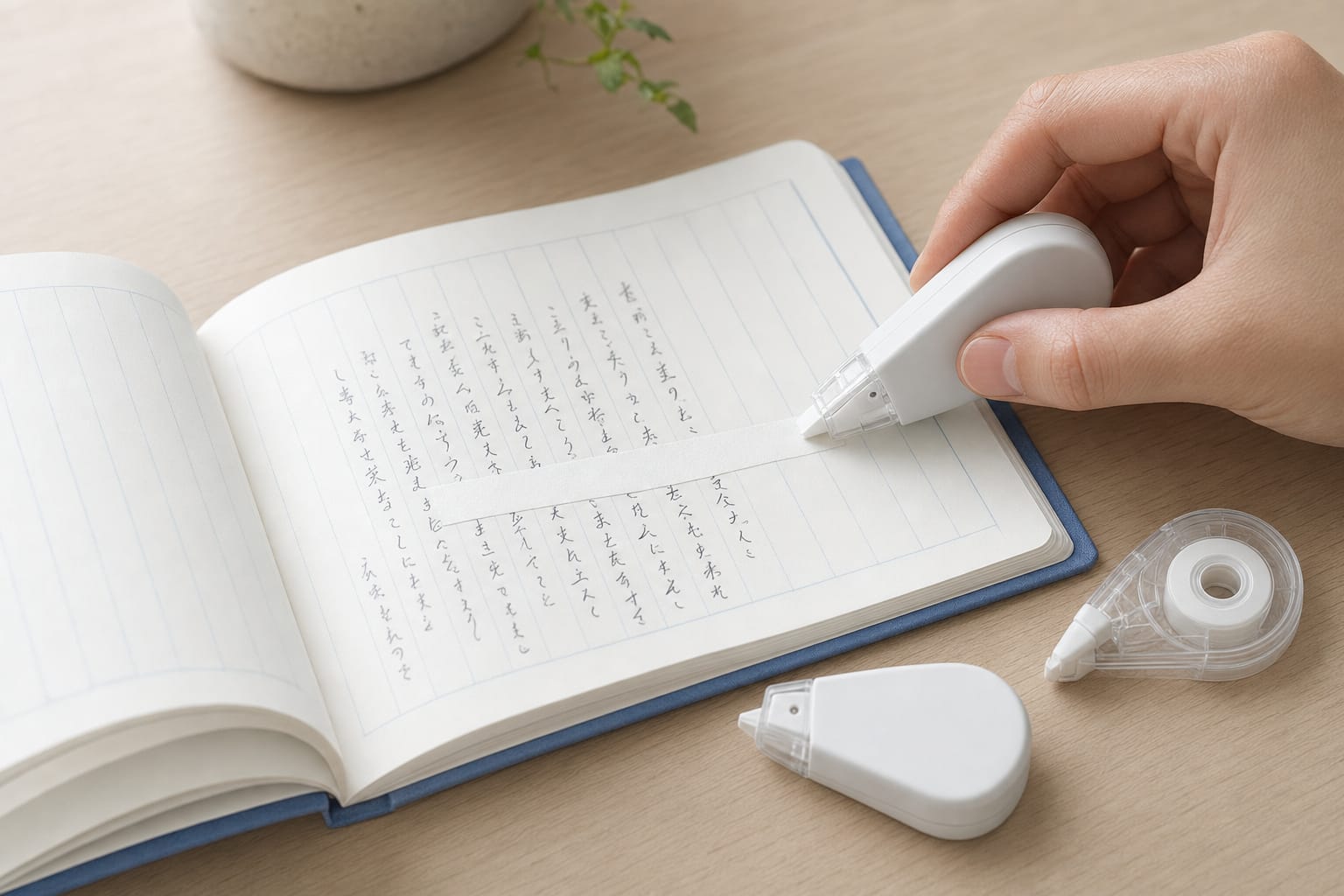
Open a desk drawer in a Tokyo office and you’ll find a small plastic dispenser that looks like a stubby pen, loaded with a dry white ribbon instead of ink. Nobody asks what it’s for. It’s correction tape, and it has been the default way to fix a mistake on paper here for more than three decades — not liquid white-out, which most people my age have genuinely never used on a real document.
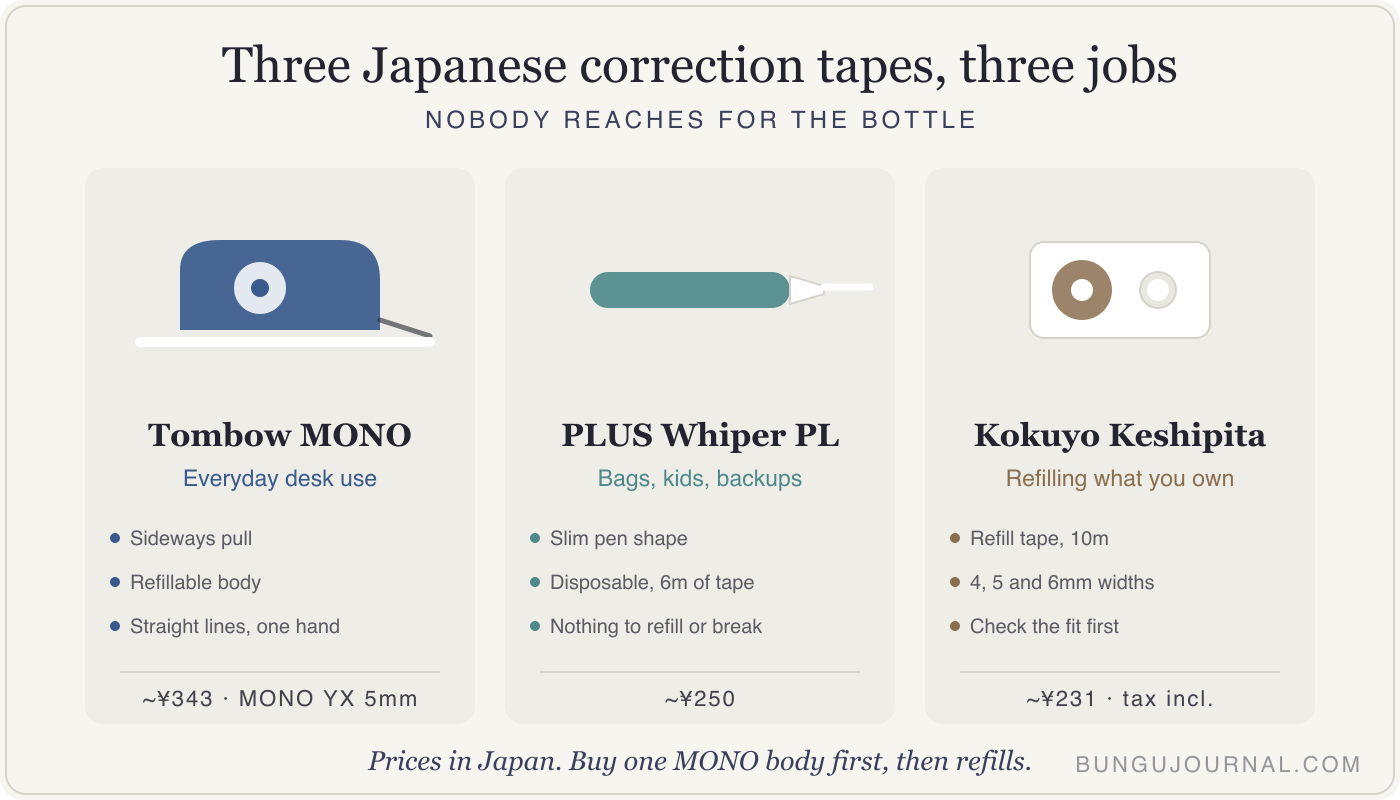
The short answer: for an all-purpose dispenser that won’t jam on you, buy a Tombow MONO tape (the sideways-pull kind, around ¥343 for a 5mm roll) — it’s the refillable sideways-pull design most people here picture when they hear “correction tape.” If you want a cheap option to toss in a bag, the disposable PLUS Whiper PL is a slim pen-shaped dispenser at around ¥250. And if you’re refilling a dispenser you already own rather than buying a new body, Kokuyo’s Keshipita cartridges (about ¥231 tax-included) are the easy default. More on what actually separates them below.
Why tape won out over liquid
The idea of correcting a mistake by covering it rather than erasing it isn’t Japanese — but the tape version of it is. Correction tape in its current, dry-film form is credited to SEED, an Osaka company founded in 1915 and still best known for its erasers. SEED had been making liquid correction fluid since the early 1980s, and in 1989 it put Keshiword on sale — generally cited as the first correction tape sold anywhere. Liquid fluid had been the standard in Japanese offices for years by then.
The reason tape caught on anyway is almost entirely about friction in daily use, not cleverness for its own sake. Liquid fluid has to dry before you can write over it, it has a solvent smell, and a steady hand is required or you get a lumpy, visible patch. Tape goes down instantly, dry, in one pass. You can write over it the second it’s applied.
Tombow’s MONO line is built around a sideways-pull mechanism — you drag the tape head across the page the way you’d draw a line with a pen, rather than pushing it forward like a lint roller — which makes it easier to lay a straight line with one hand while holding the paper flat with the other.
It’s also the shape most people now picture the moment someone says “correction tape.”
Three dispensers, three different jobs
Tombow MONO — the one that became the standard
This is the sideways-pull mechanism described above. The MONO YX in 5mm runs around ¥343 for the body, takes replacement cartridges, and comes in other widths if 5mm doesn’t suit your handwriting. Like most dry tapes, it’s happiest under gel and ballpoint ink; a very wet fountain pen nib can bead or smudge on the film, which is the main limitation to know about. For everything else, it’s the one to own first.
PLUS Whiper PL — the cheap, disposable one
PLUS Corporation’s Whiper range covers everything from refillable desk dispensers to throwaways, and the PL is the throwaway end of it: a slim pen-shaped body holding 6 meters of 5mm tape, meant to be tossed once it runs dry rather than reloaded. It runs around ¥250. It’s what I’d actually hand a kid, since there’s no refill mechanism to break.
Kokuyo Keshipita — the refill you reach for without thinking
Kokuyo’s Keshipita isn’t a flashy dispenser so much as a refill system. Replacement tapes run about ¥231 tax-included for a 10-meter roll, in 4, 5 and 6mm widths. It’s not the brand you’d pick for a design shelf. It’s the one that’s already in the drawer when you need it, which in an office is most of the job.
Where the tape earns its keep
The correction tape on my desk sits next to the same Kokuyo Campus notebook I’ve carried since cram school — the one I wrote about when comparing it to an imported “premium” notebook I gave up on after four pages. The pages of that notebook have a few short white patches on them, not ink crossed out with a pen, because fixing a wrong meeting date by hand in front of other people looks sloppier than just covering it and rewriting. That’s a small, practical use for a cheap tool, and it’s most of why the category exists at all.
One place tape doesn’t help: anything written in fountain pen ink that’s already fully dried and soaked into the paper fiber. The tape will sit on top fine, but scratch at the edge and you can lift fibers with it. Pencil and most gel or ballpoint ink are the safe cases.
How to buy without regret
- Buy the dispenser once, then just buy refills. Most brands’ bodies take their own branded cartridges indefinitely, so the first purchase is really a decision about which refill ecosystem you’re joining.
- Match the width to your handwriting. A 4mm tape on a wide ballpoint line leaves visible ink at the edges; a 6mm tape on small handwriting wastes tape and looks clumsy. 5mm is the safe default for most people.
- Skip the giant no-name multipacks sold in bulk online. The mechanism inside a correction tape dispenser is a small spring-loaded gear train, and that’s exactly where cheap unbranded dispensers cut corners — one that jams or snaps the tape halfway through the roll costs more than the brand-name one did.
The comparison table
| Tombow MONO | PLUS Whiper | Kokuyo Keshipita | |
|---|---|---|---|
| Mechanism | Sideways-pull, refillable body | Disposable pen-style | Refill cartridge |
| Price (5mm-class) | ~¥343 | ~¥250 | ~¥231 (tax-included) |
| Best for | Everyday desk use, straight lines | Kids, bags, backups | Topping up a dispenser you own |
| Watch out for | Can smudge under wet fountain ink | Not refillable | Cartridge-specific, check fit |
What I’d actually buy first
If you only buy one thing from this article, make it a Tombow MONO body with a spare refill — it’s the most familiar shape in a Japanese stationery aisle, and once you’ve used the sideways-pull motion a liquid-fluid brush feels like going back to carbon paper. Keep a PLUS Whiper PL in a bag for the times you don’t want to carry anything that could leak, and once you’ve worn through the Tombow’s first refill, Kokuyo’s Keshipita cartridges are the ones most drawers already default to.
If you’re building out the rest of the notebook this tape goes into, the Kokuyo Campus vs. Midori MD comparison covers which paper handles a correction patch without warping, and the full Japanese notebook breakdown has more options if you’re starting from nothing. For the pen you’ll actually be writing over the tape with, the Japanese pens breakdown covers which inks dry fast enough not to smear against a fresh patch. And if erasers are more your category of mistake, the Japanese erasers piece covers the pencil side of the same problem.
Buy the plain tape before the decorated versions some brands now sell. The decorated ones photograph well and work exactly the same as the plain ¥343 roll sitting next to them on the shelf.
— Sen
The Desk Reset (Free)
A 10-minute checklist to set up a calm, analog-friendly desk — the Japanese office worker way. Printable, one page.
Get the checklist →