Notebooks
Best Japanese Notebooks in 2026: Kokuyo, Midori, Tsubame — and the One I Actually Use
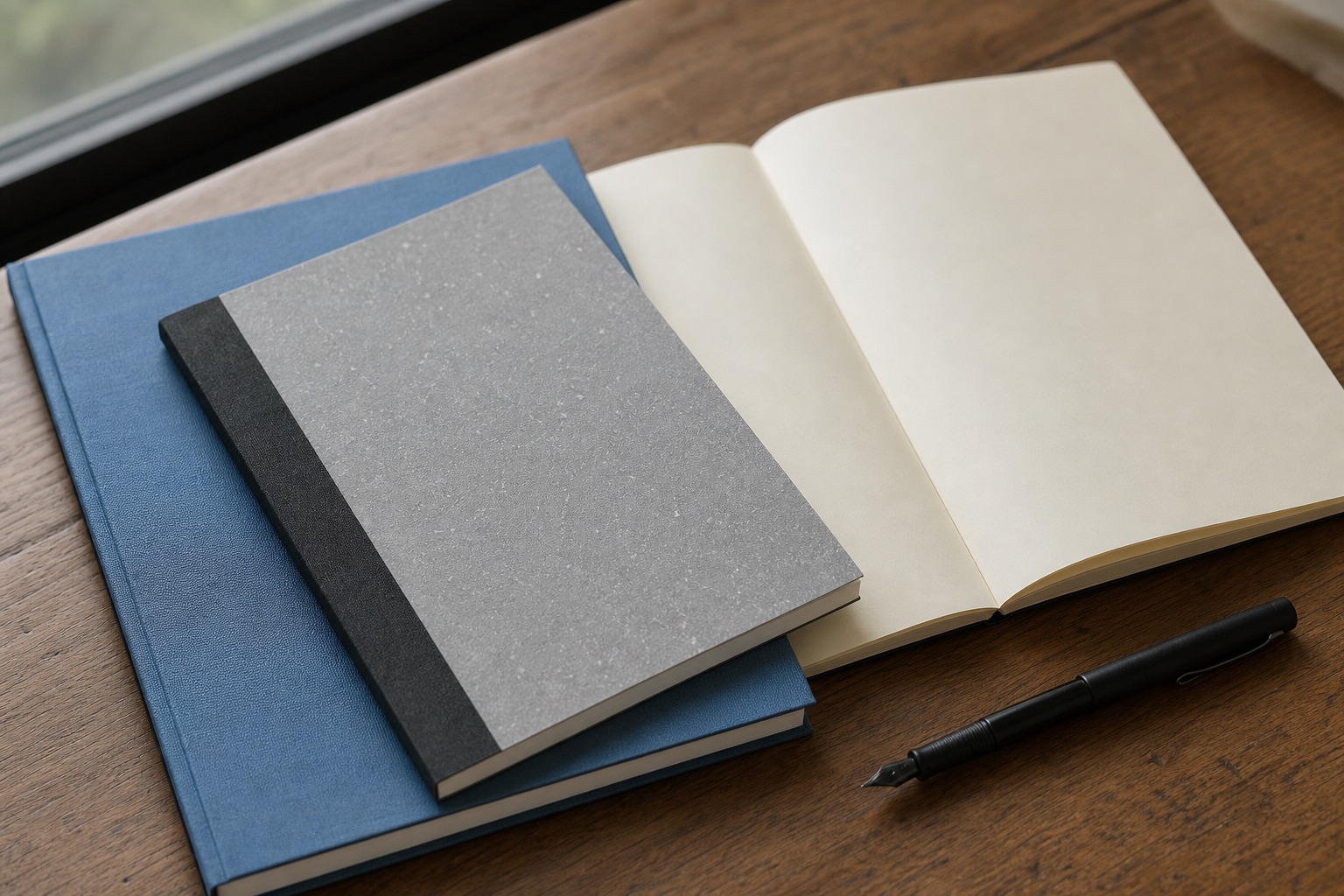
A ¥250 notebook from a Japanese supermarket will outperform a $15 notebook from a Western stationery aisle, and it isn’t close. That’s not brand loyalty talking — it’s paper engineering that most shoppers outside Japan have never been given a reason to notice.
The short answer: for everyday writing, buy a Kokuyo Campus notebook — it’s what’s actually on my desk, it costs about the same as a can of coffee, and the paper resists ink bleed better than notebooks three times the price. If you write with a fountain pen and want something a step up, get a Midori MD Notebook. If you want the notebook stationery obsessives get sentimental about, that’s Tsubame. And if you take notes standing up in meetings and want pages you can actually tear out clean, get a Maruman Mnemosyne. Details on all four below.
Why Japanese notebook paper is its own category
Here’s the part the “just buy the cute one” recommendations skip: Japan’s paper industry didn’t get good at notebooks by accident. It got good because the demand was brutal and specific.
Japanese handwriting is dense — more strokes per square centimeter than the Latin alphabet — which I’ve written about in the pen ink piece on this site. What that means for paper, specifically, is that any bleed-through or feathering turns a page illegible fast. A paper mill that can’t hold a fine line under gel or fountain ink doesn’t get shelf space in a country where students fill exam grids by hand every year. So the mills that survived got obsessively good at smoothness and ink control, and that manufacturing floor is the same one making the notebook you’d buy today.
There’s also a retail habit that reinforces it: stores like Loft and Tokyu Hands keep open notebooks on the sales floor with pens chained next to them, specifically so you can test how paper takes ink before buying.
Nobody trusts a spec sheet here.
Everyone tests first, and that culture produces notebooks that have actually been handled by thousands of skeptical customers before they sell.
One more thing worth knowing if you’re shopping from outside Japan: rule sizes are measured differently. Japanese “A罫” (A-ruled) is usually 7mm line spacing, “B罫” is 6mm — both noticeably tighter than the wide-ruled notebooks common in US stores. If your handwriting is large, the tighter grid can feel cramped at first. Give it two weeks before you decide it isn’t for you — that’s roughly how long the adjustment actually takes.
The four notebooks, honestly sorted
Kokuyo Campus — the one everyone actually owns
Kokuyo’s Campus line is the default notebook in Japanese schools and offices, in the same unglamorous way a stapler is the default stapler. A standard B5 with 30–40 sheets runs about ¥210–260 at Kokuyo’s own store, and the paper — Kokuyo rates it around 70gsm — resists feathering well past what that price would suggest. It’s the notebook this article was drafted in. Outside Japan, the A5 in 8mm ruling is the closest thing to what sits on a Japanese desk, and it still costs less than a sandwich. Downsides: the classic version only comes in metric rulings sized for Japanese handwriting, and the cover is plain enough that “boring” is the compliment, not an insult — it’s what Japanese design writing calls shibui, a quiet, unflashy kind of good that you only notice after using the thing for a year.
Midori MD Notebook — the fountain-pen upgrade
Midori’s MD line (A5, standard weight, around ¥990 retail) is a step up in both paper feel and price — cream-toned, faintly rough in a pleasant way, genuinely built for fountain pens and thicker ink loads. It’s the notebook I reach for when I want a page that looks considered, not just filled. The tradeoff is real: at nearly four times the Campus price, and without the tear-out convenience of a spiral notebook, it’s not what you hand a coworker who needs to jot a phone number.
Tsubame Note — the one collectors get sentimental about
Founded in 1947, in a postwar Japan short on decent paper, Tsubame built its reputation on importing the idea of British “foolscap” writing paper and adapting it into what’s now called Tsubame Fools Paper — a smooth, faintly textured sheet that fountain pen users specifically seek out. The cover design, a speckled gray with a black taped spine, hasn’t changed since. That continuity is the whole appeal: it’s the one notebook on this list that looks the same as it did to your grandparents’ generation. It’s a lined-only, no-frills product, though — don’t expect grid or dot variants, and it’s genuinely harder to find outside Japan than the other three.
Maruman Mnemosyne — the meeting-room workhorse
Spiral-bound, perforated, and built to lay flat when you’re writing standing up — Mnemosyne notebooks (the N193 memo pad up through the N199 A4 size) are what a lot of Japanese engineers and designers actually use in meetings, because the pages tear out cleanly along a real perforation instead of leaving a spiral-torn edge. Made in Japan, sold in the US in the $4–9 range depending on size. The wire spiral is the catch: it’s the least travel-friendly of the four, and it can dent in a bag if you’re not careful.
The comparison table
| Kokuyo Campus | Midori MD | Tsubame | Maruman Mnemosyne | |
|---|---|---|---|---|
| Feel | Everyday, unremarkable | Smooth, considered | Classic, textured | Utilitarian |
| Best for | Daily notes, any pen | Fountain pens, journaling | Collectors, gifting | Standing meetings |
| Price (Japan) | ¥210–260 | ~¥990 | Moderate, mid-range | Varies by size |
| Binding | Sewn/staple | Sewn | Sewn | Spiral, perforated |
| Downside | Metric rulings only | Pricier, no tear-out | Lined only, hard to import | Wire can dent |
How to buy without regret
Don’t assume “Japanese” automatically means high quality — I learned that one the hard way. A few years ago I grabbed a no-name notebook from a discount shop because it was cheap and had kanji on the cover, and every fountain-pen page I wrote in it feathered into a blurry mess within a week. It wasn’t a fluke; unbranded paper stock varies enormously, and “made in Japan” on a bargain bin item tells you almost nothing about the paper inside. The lesson stuck: stick to a maker with a real paper reputation — Kokuyo, Midori, Tsubame, Maruman — and the ¥100 you save on the no-name version isn’t worth what you lose in usable pages.
A second pitfall: don’t buy a full year’s supply before testing your own pen on the paper. Gel ink, fountain ink, and ballpoint all behave differently even on good paper — if you haven’t settled on a pen yet, my pen family breakdown is a reasonable place to start — and the only real test is writing a line and turning the page over.
If you’re chasing the Instagram-famous leather Traveler’s Notebook cover systems as your starting point, skip it. That’s an accessory for people who already know they’ll refill notebooks for years; buying the cover before you’ve filled a single cheap one is spending on the costume before the habit exists. Buy the plain Kokuyo first. See if you actually fill it. If you want a system that’s already built for you instead of a blank page, I’d point you toward the Hobonichi Techo rather than a notebook at all — it’s solving a different problem.
The quiet appeal
None of these four notebooks are trying to be beautiful. They’re trying to hold a line of ink exactly where you put it, which turns out to be a harder problem than it sounds and a more satisfying one to solve well. My desk has a stack of half-finished notebooks in it right now — some Campus, one Tsubame I’m rationing because I like it too much to fill fast — and that’s fine. A notebook doesn’t have to be finished to be worth the ¥250.
Start with the cheap one. If your handwriting starts looking better than you expected, that’s not you — that’s the paper.
— Sen
The Desk Reset (Free)
A 10-minute checklist to set up a calm, analog-friendly desk — the Japanese office worker way. Printable, one page.
Get the checklist →